
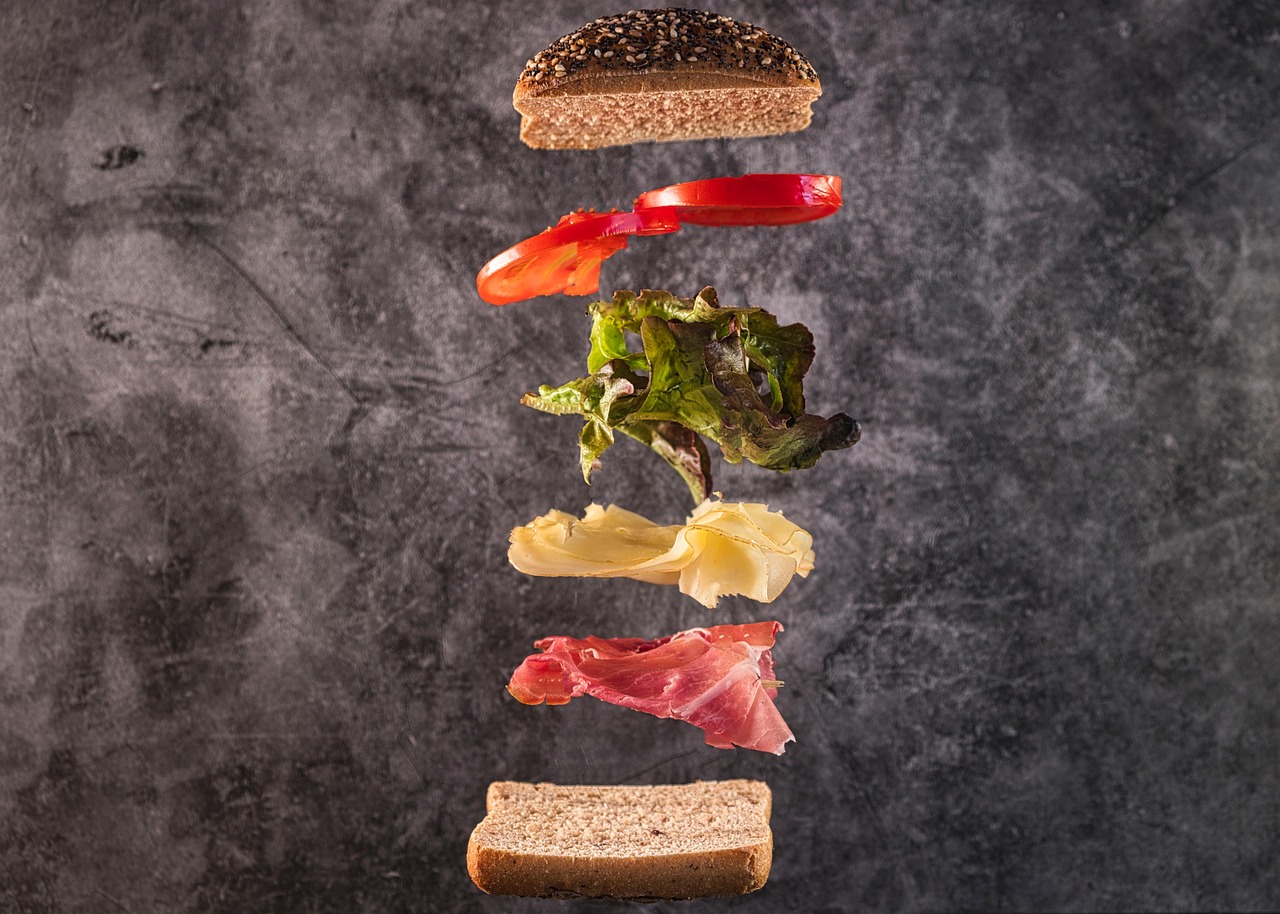
It is lunchtime, and you are going to choose a sandwich from the coffee shop. Which sandwich has a lower carbon footprint that others? You probably think that a vegetarian sandwich is always the best option over sandwiches with meat. But this is not always the case and the research into the carbon emissions of food show surprising results.
Sandwiches and ingredients
When it comes to choosing a sandwich based on what is best for the environment, it is not a simple trade-off between meat and vegetarian sandwiches. Professor Bridle analysed the carbon emissions of the most popular sandwiches below (CO2e represents the amounts of carbon emissions being produced by each sandwich). The data shows that chicken and ham sandwiches have significantly less emissions than those containing cheese and beef:
A chicken sandwich 578g CO2e
A ham sandwich 678g CO2e
A cheese sandwich 938g CO2e
A cheese and ham toastie 966g CO2e
A steak sandwich 2453g CO2e
(All sandwiches assume to contain butter)
Cheese in sandwiches
Cheese sandwiches are vegetarian, so why do they have a higher carbon footprint than sandwiches with ham and chicken? Cheese has a high carbon footprint because they are made of cow’s milk. Raising cattle requires a huge amount of land which is why they are the main cause of deforestation globally, particularly in the South American Amazon rainforest, as trees are cleared for cattle to graze. No other farm animal contributes to deforestation as much as cattle. Cattle also produce methane, another greenhouse gas, when digesting food which adds to global warming.
Since cheese has much higher emissions than other ingredients, cheese should be treated like meat. This means it is best to have cheese in smaller amounts rather than in large quantities. Cheese does not need to be completely avoided, but the quantity you eat will have a big impact on the carbon emissions of the sandwich. Does it matter what type of cheese is in the sandwich? Unfortunately, it does not make much difference whether it is mozzarella or cheddar because they contain milk and will both significantly increase emissions.
Which meat is the best in a sandwich?
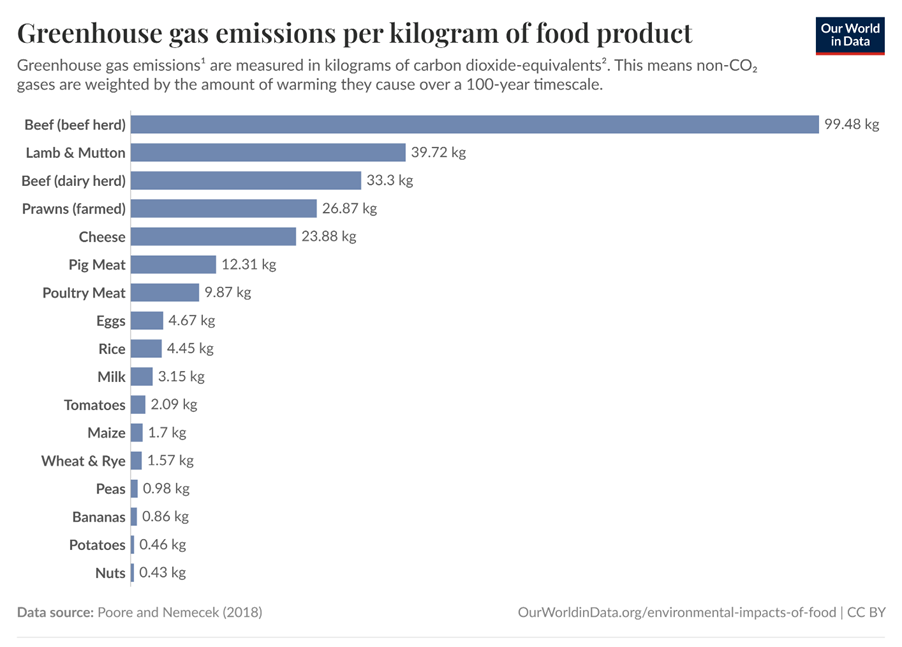
If you want to buy a sandwich with meat, the easiest thing to do is to avoid sandwiches with beef and lamb. Chicken, turkey, ham and any fish have a much lower carbon footprint than beef and lamb because cattle and sheep are ruminant mammals. This means because of the way they digest plant-based food they produce methane. Methane is a greenhouse gas that is much more potent than carbon dioxide at trapping heat in the Earth’s atmosphere. Below, you can see from research by Our World in Data that beef and lamb have a much higher footprint than any other meat:
Does the bread matter?
Bread has such a low carbon footprint that it does not matter what type of bread you are getting for your sandwich. What makes the biggest difference is the ingredients going inside it rather than whether the bread is white or brown.
What about other ingredients like salad and mayonnaise?
Vegetables such as onions, lettuce and tomato have a very low carbon footprint because they are plants. Plants do not require a large amount of land and resources to grow compared to meat, they are usually be grown locally and therefore has lower transport emissions. Other common ingredients like mayonnaise and butter do contain milk, but they will not make much difference if they are using small amounts. If you use vegan alternatives to butter and mayonnaise, this will lower the carbon footprint of the sandwich.
Do vegan sandwiches have a lower carbon footprint than vegetarian sandwiches?
Yes, vegan sandwiches have a lower carbon footprint than vegetarian sandwiches and sandwiches with meat because they do not contain any meat or dairy. Plant-based substitutes for dairy-based products such as cheese, mayonnaise and butter have a much lower carbon footprint. Vegan sandwiches will also have a lower carbon footprint than a chicken sandwich because plants have a much lower carbon footprint than meat.
Which sandwich should you pick?
Try to avoid sandwiches with lots of cheese, beef or lamb. The example of sandwiches shows that being vegetarian is not always the best option for the environment because cheese is like a meat when it comes to carbon emissions. It is more to do with the type of meat is in the sandwich and whether the ingredients come from cows.
Source:
‘Food and climate change without the hot air’ (2020) by Professor Sarah Bridle
‘Environmental impact of food production’ (2022) by Hannah Ritchie, Pablo Rosado and Max Roser
Leave a Reply