
There are two things that contribute the most to our diet’s carbon footprint and it is probably not what you think it is. Factors such as whether the food is organic, if it is local or packaging make a small difference to our diet’s carbon footprint. The transportation and packaging of food only contribute 5% each to total emissions of food we buy and we should worry less about these things. The first factor that adds the most to our carbon footprint is eating beef. In our previous article ‘The worst thing you can possibly eat’, we explain how beef is the leading cause of deforestation, adding a large amount of greenhouse gases to the atmosphere each year and destroying the Amazon rainforest that is close to tipping point.
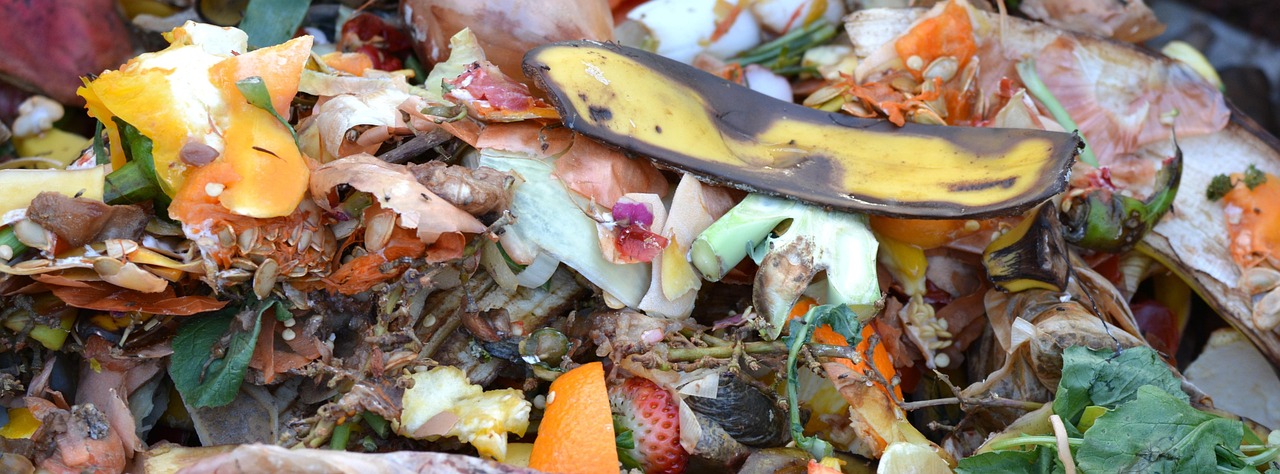
The second largest factor is food waste. Food production is inefficient and about a third is wasted globally. We produce 5000 calories per person, yet 266 million people will go hungry in 2026. Food waste contributes as much to greenhouse gas emissions as beef worldwide. In Europe and North America, 60% of food waste happens in the household.
In the UK, consumable food waste is worth £284 per person each year. We throw away 3 kg of food per week per person. This is the equivalent of three bags of sugar or six packets of pasta. For every 3 kg wasted, 23 kg of greenhouse gases are produced. This is one of the most important areas to work on when moving onto a more sustainable lifestyle. Reducing waste saves money and lowers your carbon footprint.
Compost your food waste
Here are some types of composters you can buy to reduce emissions from throwing away food that ends up on landfill:
A hot composter
A hot composter is a good option if you are concerned about the smell and the flies that can come with composting. A hot composter comes with a lid and built-in carbon filter to absorb the smell. It turns food waste into compost quickly because it uses heat to fasten the pace of decomposition. One thing to look out for when buying a hot composter is whether you have to pre-mix waste.
A wooden composter
A wooden composter tends to be cheaper than a hot composter, but there may be more problems with the smell and flies. Depending on the brand, some wooden composters are faster at turning food waste into compost.
A wormery
Wormeries are designed for small-scale kitchen waste. Tiger worms are used to break down food waste instead of decay. The problem with wormeries is that it cannot break down all types of waste and you will still need a compost bin to get rid of all your food waste.
Reduce what you need to throw away
Give food away to food banks
There are increasing amount of food banks in the country, so donate to them if you can. There are also apps like Olio, which allow you to post food online that you have bought but don’t want, to give away in your local area.
Put food in the freezer
Food lasts longer and stays fresher when it is put in the freezer. If you are worried that you have bought too much food, you can freeze almost everything (even eggs taken out of the shell!).
Ignore best before end dates
To some extent, you can ignore best before end dates on food. Best before end dates mean the food is at its freshest until that date but is fine after that too. You can also put food in the freezer to extend the freshness of food.
Choose ‘uglier’ fruit and vegetables
Odd-shaped fruit and vegetables tend to be left behind in supermarkets and end up on landfill. Buying these will help to reduce food waste. You can also sign up to Oddbox, a company in the UK, which delivers odd-shaped fruit and vegetables to fight food waste. Companies like Oddbox in other countries are Misfits Market and Imperfect Foods in the USA.
Ignore offers such as ‘buy one get one free’
These offers tempt us buy more than we need. We end up wasting our money, throwing away hundreds of pounds a year.
Leave a Reply