One of the most common things you regularly hear about that are bad for the environment, such as meat, plastic and fossil fuels, is palm oil. But it is less clear how we use it in our lives and the impact it has on the world. So what is palm oil and what effect is it having on climate change and the environment?
What is palm oil?
Palm oil comes from oil palm trees. It is produced in many countries but up to 85% of palm oil is produced in Indonesia and Malaysia. Palm oil is used in nearly 50% of all packaged products because it is versatile and has many different functions, from food to cosmetics and cleaning products. It can give products a longer shelf life, it is an effective binding agent, making spreads more spreadable, it is odourless and colourless and does not alter the look and smell of foods. It is often used as cooking oil and is known as ‘vegetable oil’.
How palm oil causes deforestation
Palm oil is the second biggest cause of deforestation after beef production. Deforestation reduces the stock of trees and prevents the ecosystem absorbing greenhouse gas emissions. In order to clear forests, trees are slashed and burned which puts more carbon emissions into the atmosphere and contributes to global warming. Research from ‘Our World in Data’ shows how palm oil production is responsible for deforestation:
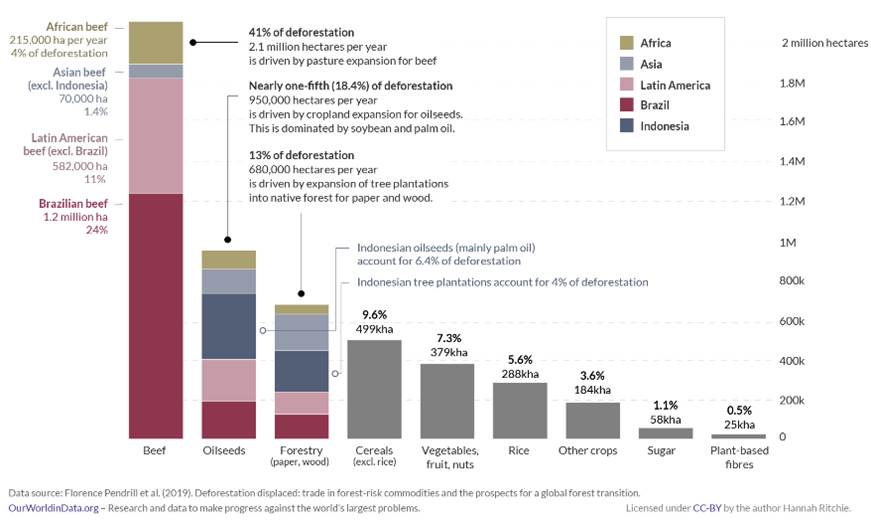
About 18% of deforestation occurs to produce oil seeds including palm oil and it is particularly harmful to tropical rainforests in Indonesia and Malaysia. Palm oil production has increased nine-fold in the last fifty years and it has greatly harmed biodiversity globally. It is estimated that this increase in production has affected two thirds of endangered birds and half of endangered mammals. So, should we avoid products that have palm oil? The answer to this question, surprisingly, is not necessarily.
Why alternatives to palm oil may not be good
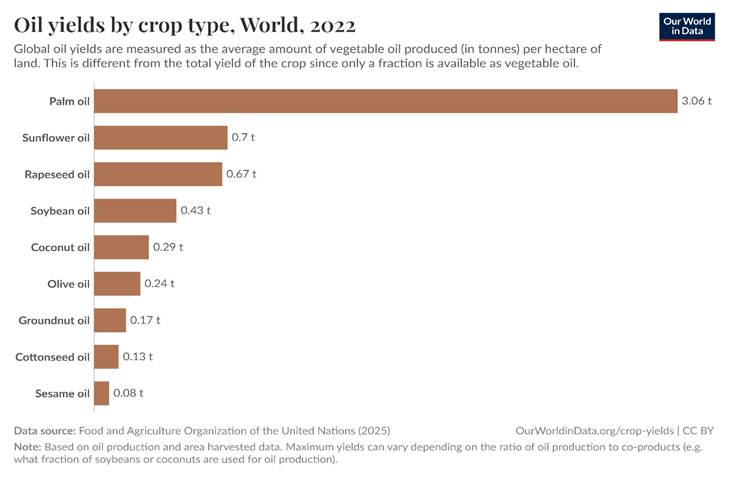
What would happen if we all avoided products with palm oil and used other plants to produce alternative oil? The problem with switching away from palm oil to another type of oil is that alternative crops produce a lower yield. This would mean even more land would need to be cleared to produce alternative oils and this would make the problem of deforestation worse. The reason why palm oil is a good option for many farmers is because it produces a high yield. This graph from Our World in Data shows the difference in yield for alternatives:
How should we shop?
The good news is that there has been a global effort to making palm oil sustainable and reducing it in products. This means that products that do not have the harmful impact of palm oil are more accessible.
Buy goods with sustainable palm oil: The best thing to do is to buy products which have used sustainable palm oil where possible. Palm oil is in so many products that it almost impossible to avoid. However, the global partnership, Roundtable of Sustainable Palm Oil (RSPO), which was formed in 2004 due to concerns about palm oil impact on the environment, helps us to identify suppliers who use sustainable palm oil. The RSPO provides a certification for products which use sustainable palm oil and they put their label on these products. RSPO suppliers can only have this certification if they have not replaced forests or greatly harmed biodiversity. Their label looks like this:
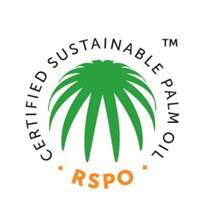
When you are shopping, look for RSPO certifications on the packaging. The most typical products you will find them in is shampoo and conditioner, cosmetics, cleaning products and food such as baked goods, snacks, chocolate, dairy products and processed food. Research has shown that RSPO has been effective at reducing deforestation.
Avoid buying generic ‘vegetable oil’: Cooking oil that is labelled ‘vegetable oil’ is often a blend of vegetables with palm oil as its base. Instead, look for single ingredient oils such as olive oil, sunflower oil, rapeseed (canola) oil, avocado oil or coconut oil.
Choose brands that avoid palm oil: If it is possible, there are alternative products that avoid palm oil. Palm oil free brands will vary around the world, but here are a few well-known brands: Amisa, Biona, Booja Booja, Flora, Graham’s, Tony Chonolony, Vego, Weight Watchers and Warburton (for bread) and Yeo Valley. A list of palm oil free companies can be found on https://www.ethicalconsumer.org/.
Source: ‘Not the end of the world’ (2024) by Dr Hannah Ritchie and ‘Palm Oil’ (2024) by Our World in Data.
Leave a Reply