It is widely understood that eating meat is bad for the environment. It is recommended by climate change policy makers that we should cut our meat intake by 2050. But there is one particularly effective way that reduces your carbon footprint in your diet. There is no meat that produces as high carbon emissions as beef. Reducing it in your diet will have the biggest impact than any other action you take with food. Why? Beef is the main reason for deforestation and the main reason for the destruction of tropical rainforests around the world. What is worse is that as the global population gets larger and richer, with a growing middle class in Asia and Africa, demand for beef is rising. This encourages more destruction of tropical rainforest, particularly the Amazon rainforest.
Tropical rainforests maintain the global water cycle, absorb huge amounts of carbon dioxide and an important habitat for half of all animals and plants in the world. It underpins our world ecological system which produces food for us and environment to live in. Tropical rainforests are close to the tipping point where they can no longer self-sustain and collapse this century. So, avoiding beef is important to reduce rates of deforestation and will have an immediate impact on reducing your carbon footprint. So much so, that cutting out beef and being just a chicken eater reduces carbon footprint more than going from a chicken eater to a vegetarian.
Why beef causes so much deforestation
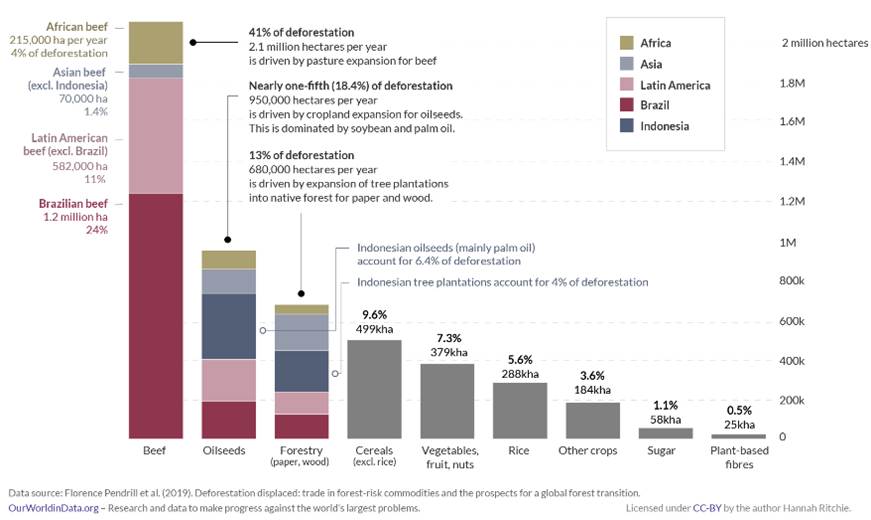
To raise cattle: About 41% of deforestation occurs just to clear land to raise cattle. Cattle need a lot of land to graze compared to other animals. The main countries these occur in are in Latin America, particularly in Brazil. Between 2005 and 2013, 2 million hectares of rainforest were cleared each year.
To make food for cattle: On top of this an extra 18% of deforestation comes from growing soybeans to feed farm animals. Cattle are fed on soybeans and nearly a million hectares of land per year is cleared to feed them and other animals. This happens most in countries such as Indonesia, Latin America and Africa, which are home to the largest tropical rainforests in the world. Below, research by Our World in Data shows the main drivers of deforestation between 2005-2013:
Beef compared to other meat
The diagram from research by Our World in Data, beef produces far more greenhouse gases than other meat.
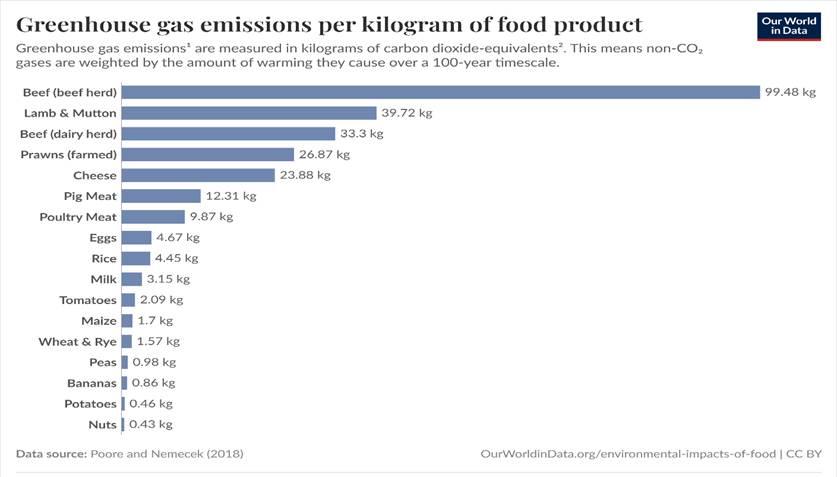
Cattle (and lamb) produce much more greenhouse emission than other animals because they produce methane when digesting food, which they burp and release into the atmosphere. Methane is the second largest contributor to global warming after carbon dioxide. This is why eating chicken, pigs and farmed fish as a substitute for beef can reduce your carbon footprint from your diet by 21% alone!
Do you need to eat beef to get enough protein in your diet?
The amount of beef eaten has reduced since the 1970s, but the bad news is that in the past few years the amount of beef eaten per person has been creeping up in the past few years. Social media has fuelled the importance of eating protein in our diets and that it needs to come from meat and dairy. But this is misleading. The amount of protein anyone needs per person is about 50 grams per day (45 grams for a woman and 55 grams for a man) and you do not need to get this from meat or beef. Research from Professor Bernes-Lee shows the amount of carbon emissions produced from 50 grams of protein you can get from a variety of foods:
130g CO2e from 250g of mixed nuts
220g CO2e from 800g of peas
420g CO2e from 625g of lentils and chickpeas
1.6kg CO2e from 2.5 pints of milk
2.1kg CO2e from 7 large eggs
2.8kg CO2e from 180g of chicken
3.8kg CO2e from 200g of pork, bacon or ham
9kg CO2e from 200g of imported king prawns
10kg CO2e from 200g of lamb
25kg CO2e from 190g of beef
The data shows protein can come from a wide variety of foods but the amount of carbon dioxide from protein is so much higher from beef than any other type of food. Carbon emissions of beef are nearly ten times higher than chicken and at least hundred times higher than peas and mixed nuts.
If we all gave up eating beef (or just had it occasionally), it would have a big impact in slowing down deforestation each year. Even if we halved the amount of beef we ate, we would be able to reclaim the area the size of the USA for forests. This would radically change the world in its fight against climate change, protect crucial rainforests and our future. If you are going to do just one thing for the environment, this would be best habit to adopt. It is the easiest and fastest thing to do to move towards Net Zero.
Leave a Reply