
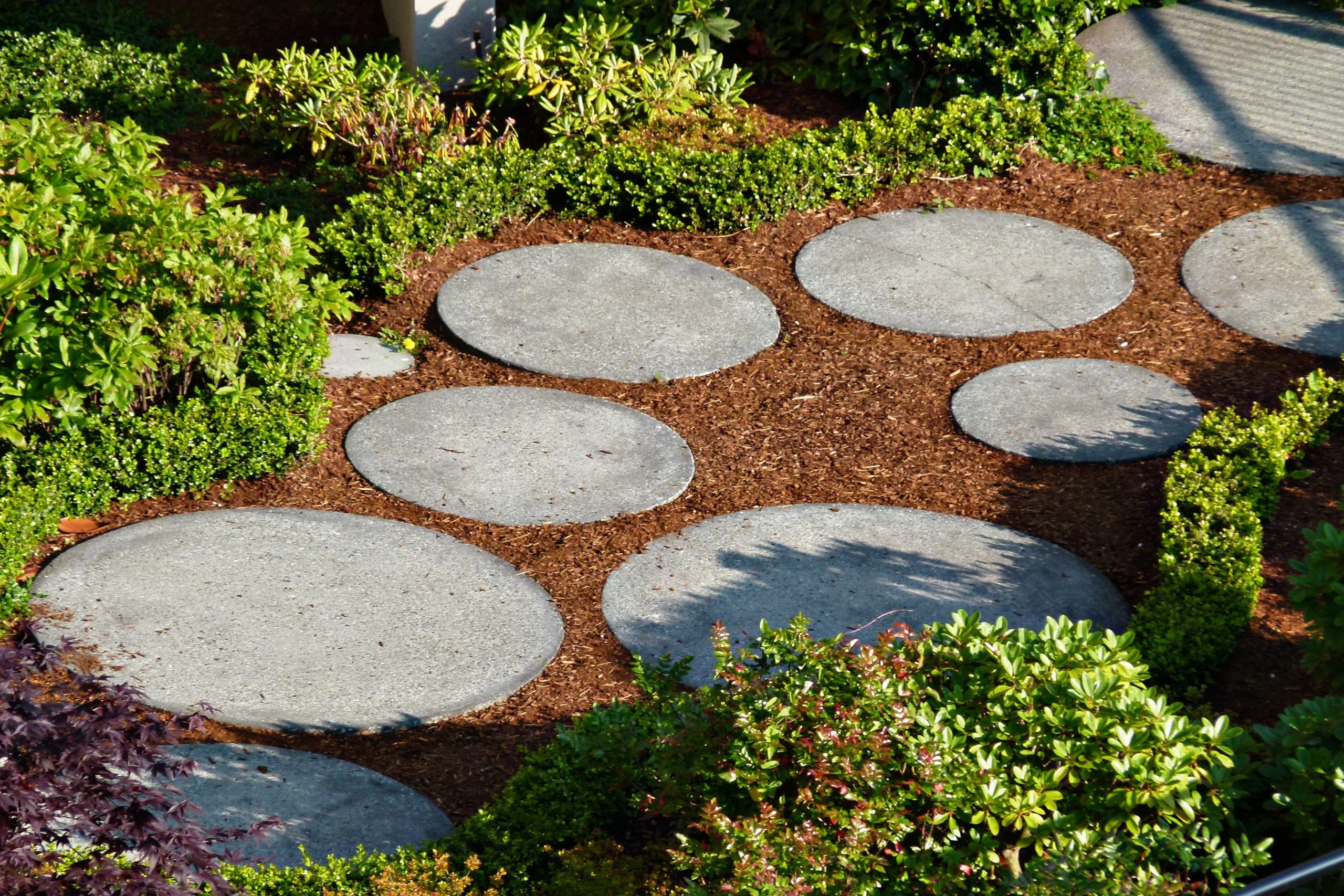
Paving in the garden can be bad thing for the environment. When used excessively, paving causes multiple problems for the environment. It exacerbates the problems with flooding and this is more of a concern with extreme weather becoming more frequent in the future. Concrete paving only absorbs 5% of rainwater and because rainwater has nowhere to go, drains overflow and flooding occurs particularly in coastal areas and urban areas. It is predicted that 1 in 4 properties in the UK will be at risk of being flooded by 2050 because of extreme weather, and our gardens can play a large role in how much rain is absorbed into the ground. Concrete is the most widely used man-made material and contributes 8% to global carbon emissions. Putting down concrete paving also destroys ecosystems and is detrimental to biodiversity. If there is already lots of paving in the garden or you plan to put some paving in the garden, there are ways you can reduce its negative impact.
Keep paving to a minimum
If you are designing your garden or driveway, the easiest thing to do is to keep paving to a minimum. The more paving there is, the less room there is for plants to flourish. This is harder to do for a driveway, but a driveway can also be designed to allow plants to grow and rainwater to be absorbed into the ground. One way to do this is to allowdriveways to drain into borders. A way to design your driveway to improve absorption of rain into the ground is to create borders to grow plants in the driveway. Excess rain can drain into these areas and lessen the impact of concrete paving. As well creating borders on the side of the driveway for rain to run to the sides, you can create a strip in the middle of the driveway, known as a ‘ribbon path’ or create patio planting pockets by lifting up paving slabs to create planting areas. If you are creating paths in you back garden, you can space out paving stones so can plant between them and soften their impact. By creating wider gaps between paving stones, plants can flourish around stepping stones and it will be easier for soil to absorb water.
Use permeable materials for paving
Paving stones are usually made out of materials such as concrete or natural stone. These materials struggle to absorb rainwater and this is causing problems with flooding and this is more of an issue in built up areas, like urban areas. What can you use instead of these types of slabs? There are a variety of permeable paving stones you can get from a garden centre. Permeable block paving and cellular paving are good alternatives to cement paving. Permeable block paving is laid down on grit to leave porous gaps through which surface water can pass. These blocks are made out of recycled concrete which cuts the carbon cost of its production. Cellular paving is a plastic or concrete grid that can take the weight of a car and suitable for a driveway. Once they are laid on the ground, they can be filled with grass or gravel. Gravel can be used on driveways instead of concrete slabs. But where gravel comes from matters, because that comes from the seabed causes terrible environmental damage. Another option is self-binding gravel. It is more expensive is but better behaved than conventional gravel.
Other sustainable alternatives to concrete that can be used in the garden. Timbercrete is a substitute for concrete slabs. Timbercrete substitutes up to 10 percent of sawmill waste, which makes them significantly lighter than concrete. Rammed earth, which is compacted subsoil or chalk, can be packed between temporary panels. Joints can also be filled with dry sand instead of impermeable, cement-based mortar and this will help excess water run right through it.
Create paths without paving
You can be creative how you create paths by avoiding paving slabs altogether. Grass and trodden-earth paths can be created in the garden. These paths are the easiest to make with a lawn edger, but they are high maintenance as you will have to mow them every fortnight and they can get muddy when it rains. Paths can also be made of mulch, woodchip and log slices. Mulch and woodchip paths can be made by laying cardboard on the floor and then covered with either material. Mulch needs to be topped up constantly to keep away weeds, whilst woodchip (which can come from local tree surgeons) only needs to be topped up once a year.
Source: Sally Nex ‘How to garden the low carbon way’ and The Royal Horticultural Society.
Leave a Reply